
Biblical education
A Graduation Belongs to a Community
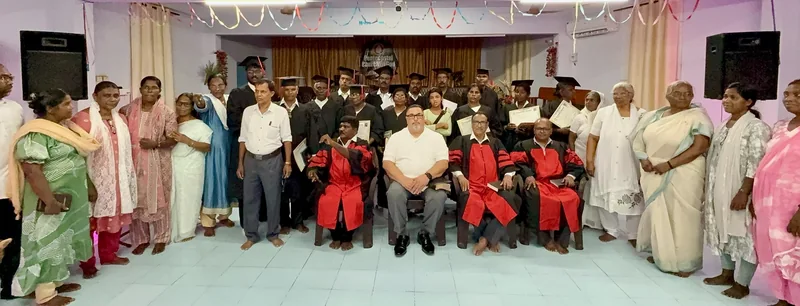
The wide photograph lets us see more than a ceremony. It invites us to consider the shared life that helps people learn to serve.
Make room for the wider picture
A close photograph can draw our attention to a certificate or a single face. A wide photograph asks us to notice the gathering around them. Graduates, leaders and other attendees share the space and the occasion. The fuller view gives us a way to consider Christian education as part of a shared life, with responsibilities that extend toward other people.
That wider view matters. Education takes place within human relationships. Learners receive instruction, ask questions, listen to examples and discover where their understanding needs to grow. In a Christian setting, they are also learning how to belong to a body of believers. The habits formed around others can shape how a person later treats a congregation.
A body that needs every part
In 1 Corinthians 12, Paul describes the church as a body whose members need one another. His argument addresses a community troubled by division. Different gifts do not give believers permission to dismiss one another. The chapter directs attention toward shared honor and care, including the members who might otherwise be treated as less important.
A graduation community gives us an occasion to honor that shared life. Christian service includes contributions that receive different amounts of attention, each worth recognizing with gratitude. A leader preparing for ministry can learn to welcome the gifts and help of others. The body grows through participation, with people giving and receiving the care that makes fellowship personal.
Tsholofelo Kukuni on 1 Corinthians 12The purpose of being equipped
Ephesians 4 describes the body growing in love as each part contributes. Timothy A. van Aarde connects the equipping work of leaders with the participation and service of the whole church. The image gives theological education a broad horizon: helping people become ready to strengthen others. A learner is preparing for relationships, responsibilities and a place within the life of a congregation.
This is why the atmosphere around education matters alongside its content. A student encouraged to ask a careful question can learn to welcome questions later. Someone who receives correction with dignity can discover a better way to correct others. Life together offers repeated opportunities to practice the patience and care that a future congregation will need from its leaders.
King James BibleTimothy van Aarde on Ephesians 4Learning to listen in India
India’s many voices make listening especially important. The 2011 Census language publication classified mother tongues under 121 languages, including 22 Scheduled languages and 99 languages outside that schedule. These are categories within that census publication, rather than a complete count of every way people speak. They give national context for the care required when communicating across different settings.
For anyone preparing to serve, listening is part of loving a neighbor. Understanding takes attention to the words people use and the questions they bring. A future minister needs to explain Scripture clearly, recognize when an answer has not been understood and remain patient enough to try again. The care given to communication can become care given to a person.
Census of India: languagesThe ministry behind the gathering
Our two Bible colleges serve across two states, with approximately 35 young leaders graduating annually. Our educational story includes the PCG Bible College established by Rev. Samuel K. Thomas in Punalur, Kerala. We carry forward a commitment to prepare people who can serve our churches and surrounding communities with biblical understanding, dependence on the Holy Spirit and practical care.
Within that work, preparation concerns how a person will understand Scripture, exercise responsibility and treat a neighbor. James K. Mwangi and Ben J. de Klerk bring knowledge, personal formation and practical ministry into the same educational purpose. The questions are closely connected: what a future leader learns should shape both the words offered and the care given to other people.
Mwangi and de Klerk on theological educationWhat the gathering helps us remember
Acts 2 describes believers who continue in teaching, fellowship, the breaking of bread and prayers. Their shared life includes practical attention to need. The passage places learning within a community that worships and cares together. It offers a Christian pattern for remembering that spiritual formation concerns the way people live with and respond to one another.
The wide graduation picture helps us pause over that shared responsibility. We can celebrate the people at the center of the occasion and remember the wider purpose of their preparation. A faithful servant’s growth matters to those who may later be taught, encouraged and cared for. A community helps prepare that person, and another community may one day receive the blessing.
Kelebogile Resane on Acts 2References
- Ephesians 4, King James VersionKing James Version, 1611.
- Spiritually gifted and divided? A text-centred interpretation of 1 Corinthians 12:1-31aTsholofelo J. Kukuni; In die Skriflig 58(1), a3043, 2024.
- The missional church structure and the priesthood of all believers (Ephesians 4:7-16) in the light of the inward and outward function of the churchTimothy A. van Aarde; Verbum et Ecclesia 38(1), a1709, 2017.
- An Integrated Competency-Based Training Model for theological trainingJames K. Mwangi and Ben J. de Klerk; HTS Teologiese Studies/Theological Studies 67(2), 2011.
- Pentecostal missional ecclesiology based on Acts 2:42-47 contributes towards sustainable development in communitiesKelebogile Resane; Missionalia 52(1), 2024.
- Census of India 2011, Paper 1 of 2018: Language, India, States and Union Territories, Table C-16Office of the Registrar General, India; Official national statistical publication, 2018.
More from India Messenger Bible College
Biblical education
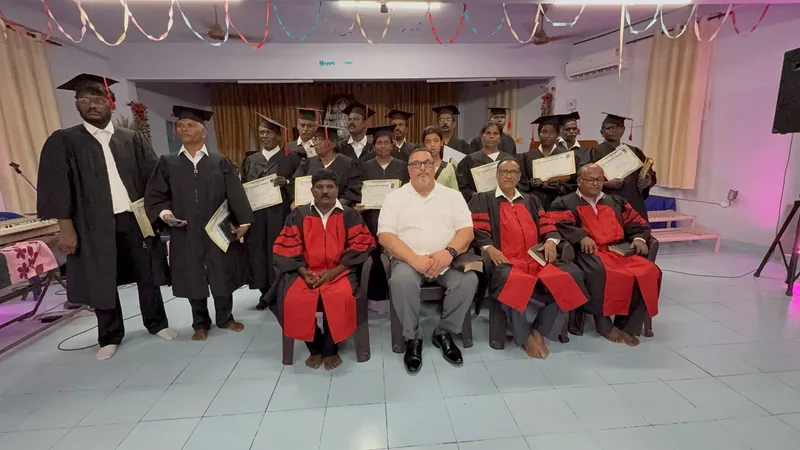
Thirty Five Graduates and the Churches Ahead
A graduation photograph records a moment. The deeper purpose of ministry education reaches into the lives of people these leaders may one day serve.
Read the story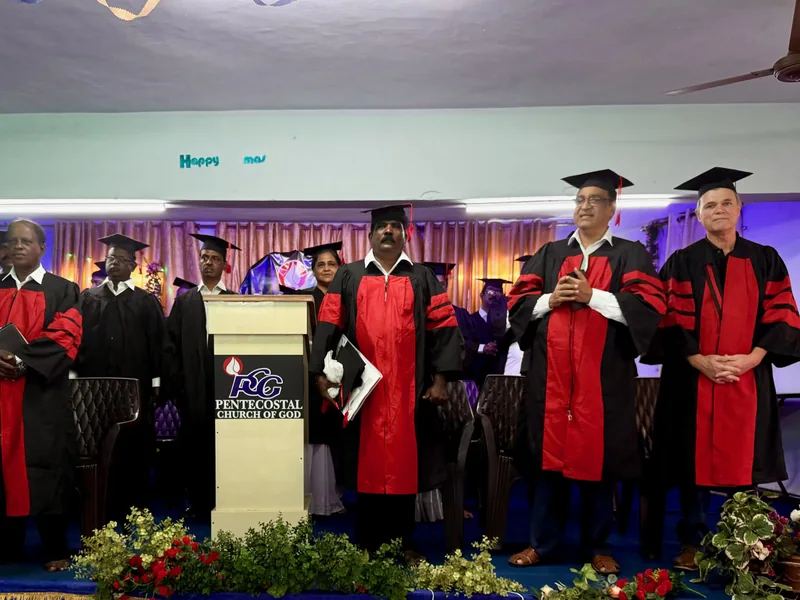
Biblical education
The Teachers Behind a New Generation
The people who prepare future ministers carry a responsibility that reaches far beyond the platform on graduation day.
Read the story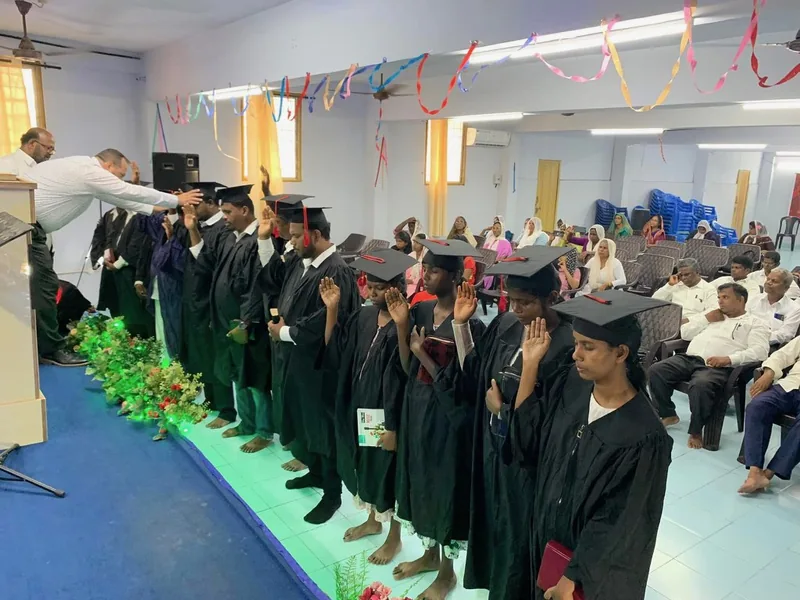
Biblical education
Why We Pray With Graduating Students
The prayers surrounding a graduation express a simple conviction: those who prepare to serve others also need the care of God and his people.
Read the story