
Biblical education
What a Certificate Can Begin
A certificate marks an achievement. Its deeper promise is the thoughtful, patient service that learning can make possible.

An achievement worth marking
There is something fitting about pausing to recognize learning. A certificate gives a visible place to an achievement that might otherwise pass quietly. It can be held, read and remembered. In a ministry setting, the occasion also directs our attention forward, toward the people a learner hopes to serve and the responsibility that comes with being trusted.
Our two Bible colleges prepare people for that responsibility, with approximately 35 young leaders graduating annually. Our purpose reaches into the life of churches and surrounding communities. A certificate marks a stage along the way. What follows will ask the learner to keep drawing on Scripture, listening carefully and growing into the work of caring for other people.
The care behind a clear answer
A person asking about faith may bring a question that has troubled them for years. Another may be hearing a familiar passage in a new season of life. The one who teaches owes them more than a quick answer. There is a responsibility to understand what is being asked and to handle Scripture with the care its importance deserves.
Second Timothy 2:15 speaks of a worker approved before God, handling the word of truth rightly. The surrounding passage warns about quarrels over words and empty speech that harms its hearers. The concern reaches beyond knowing how to sound knowledgeable. Teaching carries consequences because people listen, learn and sometimes make important decisions in the light of what they are told.
King James BibleReading with patience
Careful reading is an act of love. A verse belongs within a passage, a book and the larger witness of Scripture. Its setting matters. Its purpose matters. Before applying it to another person’s life, a teacher owes that person the patient work of understanding. The reader who asks a difficult question deserves the same care as the one who already agrees.
That habit can continue for a lifetime. Returning to the surrounding chapter may reveal something that a familiar quotation has allowed us to overlook. Listening to a thoughtful question may send us back to the text with renewed attention. Such learning requires humility. It gives a minister room to grow in understanding while remaining faithful to the truth already received.
King James BibleLearning that shapes the person
Christian preparation asks about the learner as a whole person. James K. Mwangi and Ben J. de Klerk connect theological understanding, personal formation and practical ministry in their study of training. Those concerns belong together because ministry involves the lives of other people. A teacher needs to listen, recognize personal limits and take time over a question that has no convenient answer.
Character becomes visible in ordinary conduct. It matters when a conversation runs longer than expected, when someone disagrees or when a person needs to hear an explanation again. Those are moments in which learning can become patience. A minister’s understanding has greater usefulness when other people feel able to ask, speak honestly and receive guidance with dignity.
Mwangi and de Klerk on theological educationKing James BibleThe example of the Teacher
Jesus gives a powerful example in John 13. After washing his disciples’ feet, their Lord and Teacher calls them to follow the pattern he has shown. The dignity of his position is expressed through service. The lesson invites anyone preparing for leadership to ask how learning will become practical care for the people entrusted to them.
Ephesians 4 carries that concern into the life of the church. Ministers equip believers for service and the building up of the whole body. The person learning to teach is preparing to help other people grow. That purpose gives study a generous direction. Understanding becomes something offered to a congregation, where different people have gifts and responsibilities of their own.
Cornelis Bennema on Jesus and leadershipTimothy van Aarde on Ephesians 4After the celebration
A certificate can be kept safely while the person who received it continues to grow. New questions will arise. Familiar passages may demand closer attention. People will bring experiences that require compassion before advice. A faithful minister needs the humility to keep reading and the courage to seek further understanding. Learning remains a responsibility throughout Christian service.
That is the hope worth placing beside this photograph. The achievement matters because the people who may later receive its benefits matter. We celebrate preparation with their lives in view. A carefully explained passage, an honest answer and a patient conversation can help another person stand more securely in faith. The lasting value of learning is seen in service.
References
- 2 Timothy 2, King James VersionKing James Version, 1611.
- An Integrated Competency-Based Training Model for theological trainingJames K. Mwangi and Ben J. de Klerk; HTS Teologiese Studies/Theological Studies 67(2), 2011.
- Jesus' authority and influence in the Gospel of John: towards a Johannine model of leadershipCornelis Bennema; Scriptura 115, 2016.
- The missional church structure and the priesthood of all believers (Ephesians 4:7-16) in the light of the inward and outward function of the churchTimothy A. van Aarde; Verbum et Ecclesia 38(1), a1709, 2017.
More from India Messenger Bible College

Biblical education
Thirty Five Graduates and the Churches Ahead
A graduation photograph records a moment. The deeper purpose of ministry education reaches into the lives of people these leaders may one day serve.
Read the story
Biblical education
The Teachers Behind a New Generation
The people who prepare future ministers carry a responsibility that reaches far beyond the platform on graduation day.
Read the story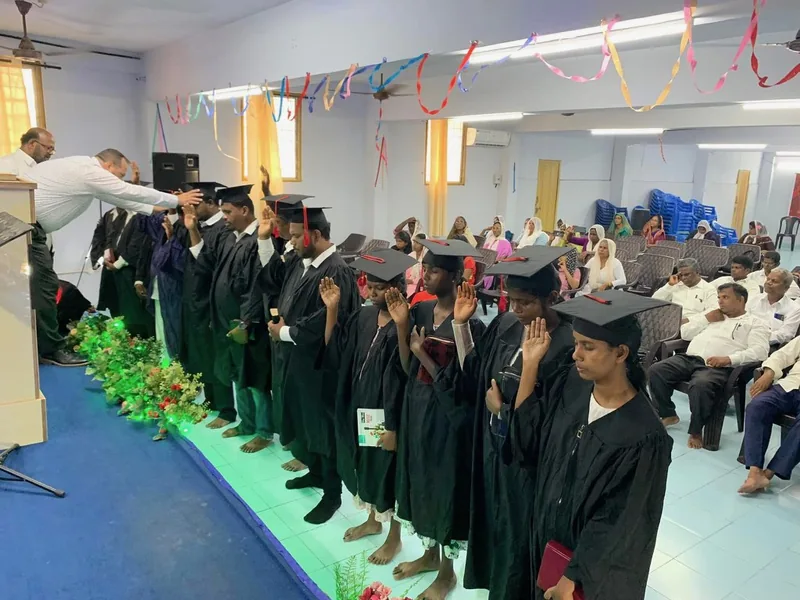
Biblical education
Why We Pray With Graduating Students
The prayers surrounding a graduation express a simple conviction: those who prepare to serve others also need the care of God and his people.
Read the story